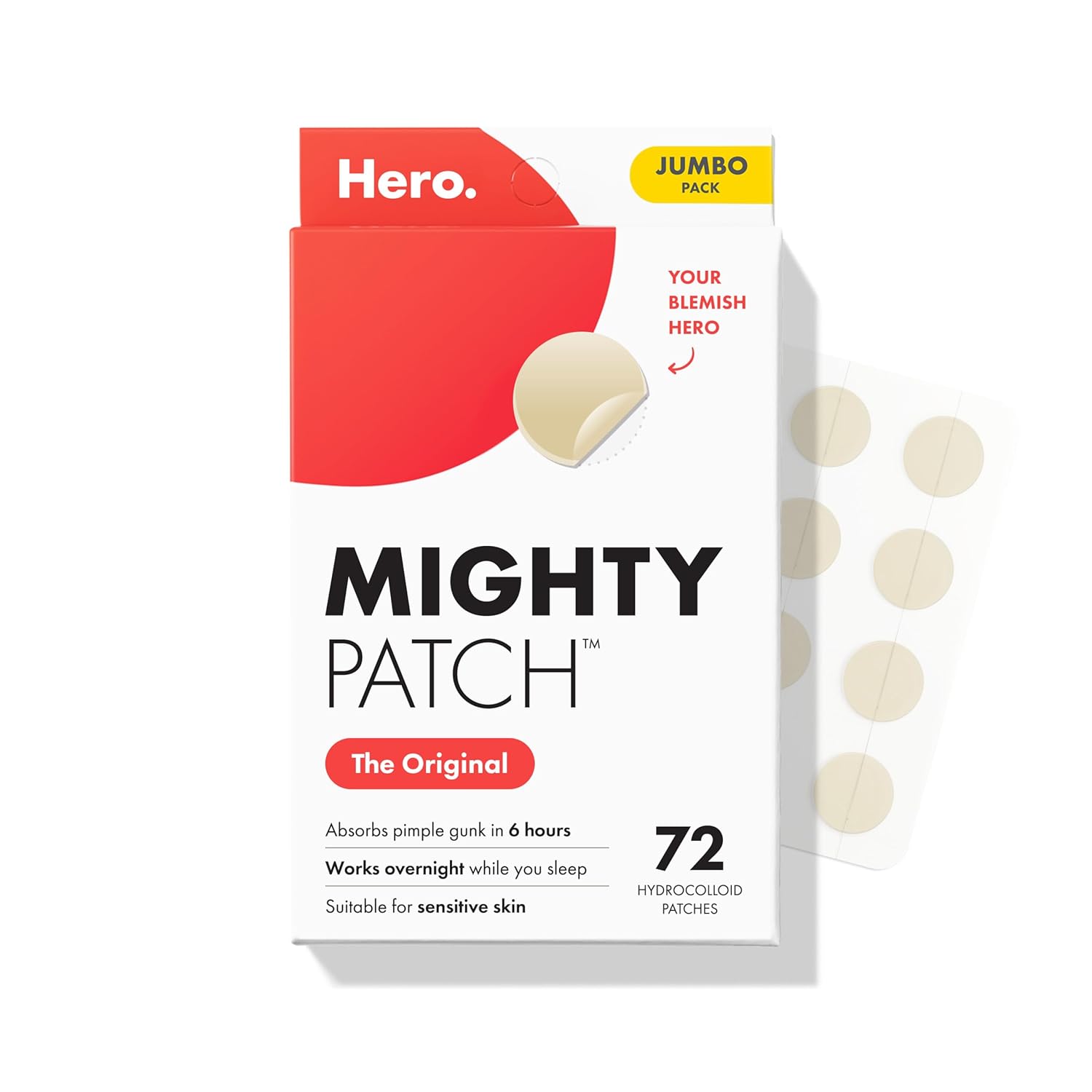
The best pimple patch overall is Hero's Mighty Patch Original
(~$0.31/patch) — the benchmark hydrocolloid dot for surfaced whiteheads. The best value
is PanOxyl PM (~$0.24/patch). For a deep, under-the-skin bump, switch formats to a
microdart patch like Peach Slices Deep Blemish Microdarts.
No patch of any type works on blackheads.
Our picks at a glance
Ranked. The full case for — and against — each one is below.
The category benchmark and Forbes Vetted's overall pick: a thick, medical-grade hydrocolloid dot that reliably flattens surfaced whiteheads overnight, stays stuck through a night of tossing, and doubles as a physical barrier against picking. The 72-count box drops the cost to about 31 cents per patch — the best per-use value in Hero's lineup.
The cheapest name-brand hydrocolloid per patch, with two sizes in every box and a slightly thicker dressing that absorbs more per wear. No benzoyl peroxide despite the brand name — these are drug-free, which makes them safe to layer with the acne actives you already use.
Yahoo Shopping's pick for cystic-feeling bumps: 176 self-dissolving darts push salicylic acid, niacinamide and cica past the surface into the pimple you can feel but can't see yet — the one a plain hydrocolloid dot can't touch. Buyers consistently report blind bumps flattened within a night or two, at a fraction of ZitSticka's price.
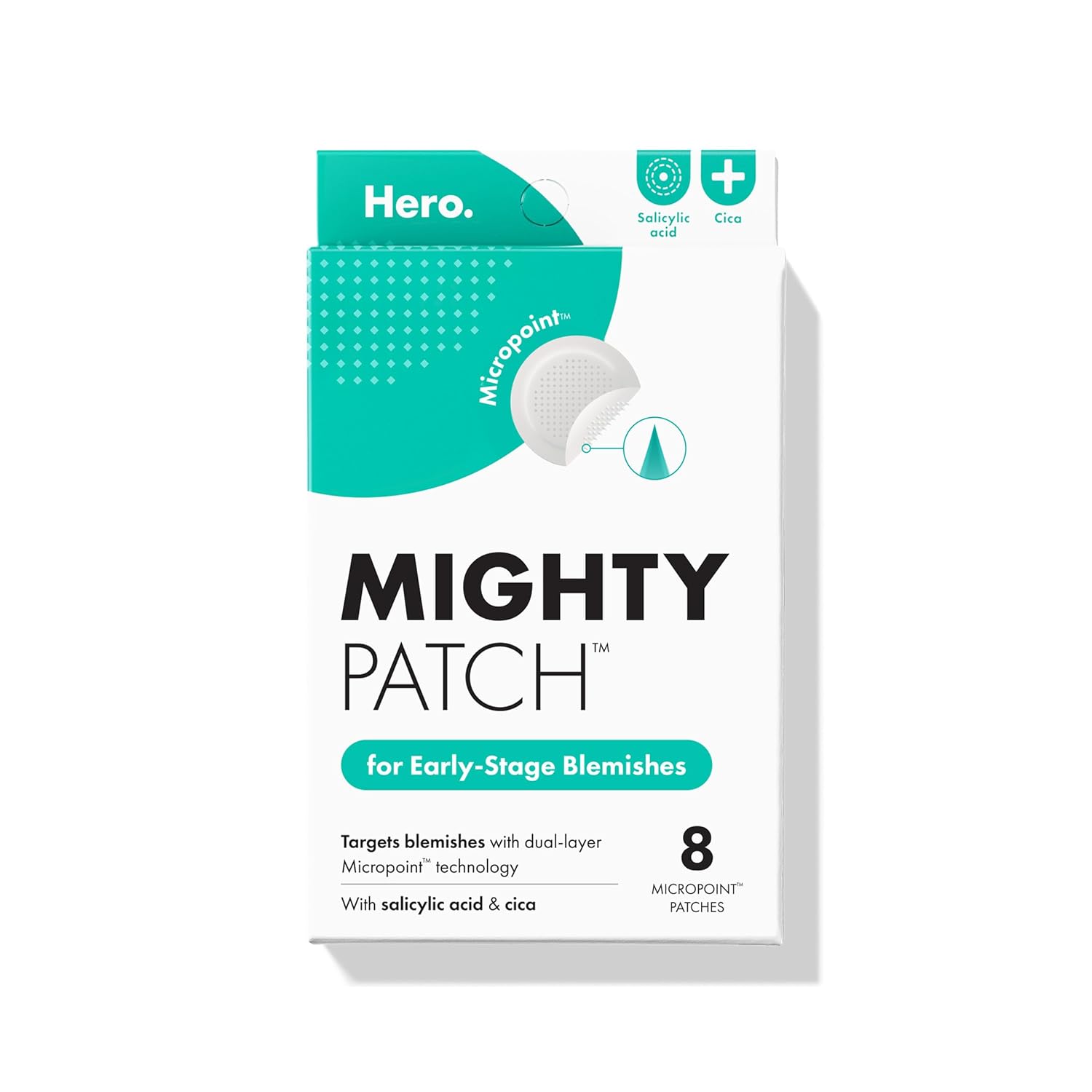
The other way to hit an underground pimple early: hyaluronic-acid micropoints deliver a deliberately gentle 0.5% salicylic dose plus antibacterial totarol, and buyers with hormonal, under-the-skin breakouts report spots that never fully surface. The mild dosing makes it the microdart pick for skin that can't tolerate stronger spot treatments.
NBC Select's style pick: the same hydrocolloid chemistry as the big names, die-cut into a yellow star you're meant to be seen in. For teens and skin-pickers, the fact that the patch is the accessory is exactly what keeps hands off the pimple — and the refillable mirrored compact beats a foil pouch for a backpack or purse.
A pore strip that doesn't rip: the XL hydrocolloid sheet molds over the whole nose, soaks up oil and pore gunk for 6-8 hours, and peels off painlessly — with the absorbed fluid visible on the patch. For oily, congestion-prone noses it's a gentle once-or-twice-a-week treatment old-style adhesive strips can't match.
Most pimple-patch roundups treat the category as one product. It's four. A plain
hydrocolloid dot, a patch spiked with actives, a microdart patch, and a nose-sized
strip solve different problems — and the single biggest reason people call
patches useless is buying the wrong type for their pimple's stage. Hydrocolloid is a
wound-care dressing: it absorbs fluid from a blemish that has surfaced,
which is why Cleveland Clinic dermatologists describe patches as "wound healing dressings
for a very specific type of lesion" — and why none of them can pull out a blackhead or
flatten a deep cyst. We compared six patches across the four formats on absorption,
adhesion, price per patch and what buyers at Ulta, Target, Walmart and iHerb consistently
report. Two of them — the
Mighty Patch Original
and the
Peach Slices Microdarts
— anchor opposite ends of the spectrum.
How we picked (the criteria that matter)
Match the format to the pimple. Surfaced whitehead → plain hydrocolloid.
Deep, tender, not-yet-visible bump → microdarts that carry salicylic acid below the surface.
Congested, oily nose → an XL strip. Adhesion. A patch that peels at 3 a.m.
absorbs nothing; overnight staying power is the single most-praised and most-complained-about
trait in buyer reviews. Price per patch. Plain hydrocolloid runs $0.24-0.40
per patch; microdarts jump to $1-1.40, so they're for occasional deep bumps, not daily use.
Actives vs none. Drug-free patches are the sensitive-skin default;
salicylic-acid formats trade gentleness for reach. We weighed those specs against
dermatologist guidance (AAD, Cleveland Clinic) and thousands of buyer reviews on
non-Amazon retailers for each pick.
The six, side by side
Patch
Type
Actives
$ / patch
Best for
Mighty Patch Original
Hydrocolloid dot
None (drug-free)
~$0.31
Surfaced whiteheads — the default
PanOxyl PM
Hydrocolloid dot (2 sizes)
None (drug-free)
~$0.24
Budget stock-up, sensitive skin
Peach Slices Microdarts
176 dissolving microdarts
0.4% SA, tea tree, cica
~$0.99
Deep, early-stage bumps
Hero Micropoint
Dissolving micropoints
0.5% SA, totarol
~$1.37
Blind pimples, sensitive skin
Starface Hydro-Stars
Hydrocolloid star
None (drug-free)
~$0.40
Daytime wear, picking deterrent
Mighty Patch Nose
XL hydrocolloid strip
None (drug-free)
~$1.50
Oily, congested noses
Per-patch cost computed from list prices at the time of review; prices fluctuate on Amazon — each review page links to the live listing.
Why it's here: The category benchmark and Forbes Vetted's overall pick: a thick, medical-grade hydrocolloid dot that reliably flattens surfaced whiteheads overnight, stays stuck through a night of tossing, and doubles as a physical barrier against picking. The 72-count box drops the cost to about 31 cents per patch — the best per-use value in Hero's lineup.
Against it: Does little for deep, closed or cystic bumps (no fluid to absorb), stubborn spots can take two or three patches over consecutive nights, and it comes in a single 12mm size.
Why it's here: The cheapest name-brand hydrocolloid per patch, with two sizes in every box and a slightly thicker dressing that absorbs more per wear. No benzoyl peroxide despite the brand name — these are drug-free, which makes them safe to layer with the acne actives you already use.
Against it: Adhesion trails the category leaders for a minority of users, and the peel-open box has a habit of pulling patches off their backing sheet before you ever use them.
Why it's here: Yahoo Shopping's pick for cystic-feeling bumps: 176 self-dissolving darts push salicylic acid, niacinamide and cica past the surface into the pimple you can feel but can't see yet — the one a plain hydrocolloid dot can't touch. Buyers consistently report blind bumps flattened within a night or two, at a fraction of ZitSticka's price.
Against it: About a dollar per pimple, and wasted on whiteheads that have already surfaced — that's the cheap patches' job.
Why it's here: The other way to hit an underground pimple early: hyaluronic-acid micropoints deliver a deliberately gentle 0.5% salicylic dose plus antibacterial totarol, and buyers with hormonal, under-the-skin breakouts report spots that never fully surface. The mild dosing makes it the microdart pick for skin that can't tolerate stronger spot treatments.
Against it: The most expensive patch here per use, weak on large cystic blemishes, and it performs poorly on the nose and other curved, oily areas.
Why it's here: NBC Select's style pick: the same hydrocolloid chemistry as the big names, die-cut into a yellow star you're meant to be seen in. For teens and skin-pickers, the fact that the patch is the accessory is exactly what keeps hands off the pimple — and the refillable mirrored compact beats a foil pouch for a backpack or purse.
Against it: Thinner and less absorbent than Mighty Patch or PanOxyl, with the category's most repeated adhesion complaints — and the star points fold onto themselves if you rush application.
Why it's here: A pore strip that doesn't rip: the XL hydrocolloid sheet molds over the whole nose, soaks up oil and pore gunk for 6-8 hours, and peels off painlessly — with the absorbed fluid visible on the patch. For oily, congestion-prone noses it's a gentle once-or-twice-a-week treatment old-style adhesive strips can't match.
Against it: It will not extract true blackheads (no hydrocolloid does), the thin patch is genuinely fiddly to separate from its liner, and per-patch it's the priciest format in this guide.
Hydrocolloid dressings came from wound care — leg ulcers and pressure sores — decades before
they shrank into skincare stickers. Over a lesion with fluid, the dressing absorbs exudate
into a gel (the white bloom you see on a used patch), maintains a moist healing environment,
and physically blocks bacteria, fingers and sun. The most-cited clinical support is a small
2006 double-blind trial in the Journal of Cosmetic Science: hydrocolloid dressings
beat plain tape on acne severity, redness and oiliness within days, and transmitted only
~7% of UVB to the healing skin. The equally important flip side: patches don't treat acne's
causes, can't extract blackheads, and can't reach deep cystic inflammation — which is where
the American Academy of Dermatology's advice for a deep, painful pimple starts with warm
compresses and ends with a dermatologist, with a hydrocolloid patch serving as protection,
not cure.
Patches vs pore pads: different jobs
A patch is a spot treatment for a pimple that exists today. If your recurring issue is
congestion — clogged pores, rough texture, blackheads — the daily tool is a leave-on
exfoliant, not a sticker. That's the lane of
Medicube's Zero Pore Pads
(a two-sided BHA/PHA swipe we've reviewed in depth) and the benchmark
Paula's Choice 2% BHA liquid.
The sensible routine uses both layers: exfoliant to prevent the next breakout, a patch from
this guide for the pimple that shows up anyway — and a
benzoyl peroxide wash
if your acne needs a true active treating it.
Frequently asked questions
Do pimple patches actually work?
On the right pimple, yes. Hydrocolloid is a wound-care dressing: sealed over a surfaced whitehead it absorbs the fluid inside, protects the spot from bacteria and picking, and speeds healing. A small randomized trial (Journal of Cosmetic Science, 2006) found hydrocolloid dressings reduced acne severity and redness versus plain tape — and blocked most UVB from reaching the healing spot. What no patch does is treat the causes of acne.
Do pimple patches work on blackheads?
No. Hydrocolloid absorbs fluid; a blackhead is an oxidized plug of oil and dead skin with nothing liquid to draw out. Cleveland Clinic dermatologists are blunt that patches can't clear clogged pores. For blackheads, a leave-on salicylic acid (BHA) exfoliant is the evidence-backed route.
Do they work on cystic or under-the-skin pimples?
Plain hydrocolloid dots don't — dermatologists note a surface dressing can't reach deep, cystic inflammation. Microdart patches (Peach Slices, Hero Micropoint) are the exception for early-stage bumps: their dissolving points carry salicylic acid below the surface. For a truly deep, painful cyst, the American Academy of Dermatology recommends warm compresses, a protective hydrocolloid patch over the spot, and a dermatologist if it recurs.
How long should you leave a pimple patch on?
Six to twelve hours is the common dermatologist guidance — overnight is the natural window. The patch turning cloudy white means it has absorbed fluid; swap it for a fresh one if the spot still has more to give. Microdart patches dissolve their points within about two hours but are typically worn around eight.
Can you wear a pimple patch during the day?
Yes. Thin 'invisible' hydrocolloid patches sit nearly flat under makeup, and a patch worn by day keeps fingers off the spot and even blocks most UV from the healing skin. Apply to clean, completely dry skin — patches won't grip over moisturizer or sunscreen.
Are pimple patches safe for sensitive skin?
Pure hydrocolloid patches (Mighty Patch Original, PanOxyl PM, Starface) contain no drugs or fragrance and are the safest bet for reactive skin. Patches with actives — salicylic acid, tea tree — add irritation potential, and adhesives themselves can bother very sensitive skin, so test on your jaw or arm first.
Do pimple patches prevent acne?
No — they're reactive, not preventive. A patch treats the pimple you already have and protects it from picking; it does nothing about the clogged pores, oil and hormones that cause the next one. Pair patches with a real routine (cleanser, exfoliant, treatment) rather than replacing one.
 1 · Best overall